|
|
|
|
|
|
|
|
July 16th, 2015 at 6:00 pm
|
|
|
| |
|
|
|
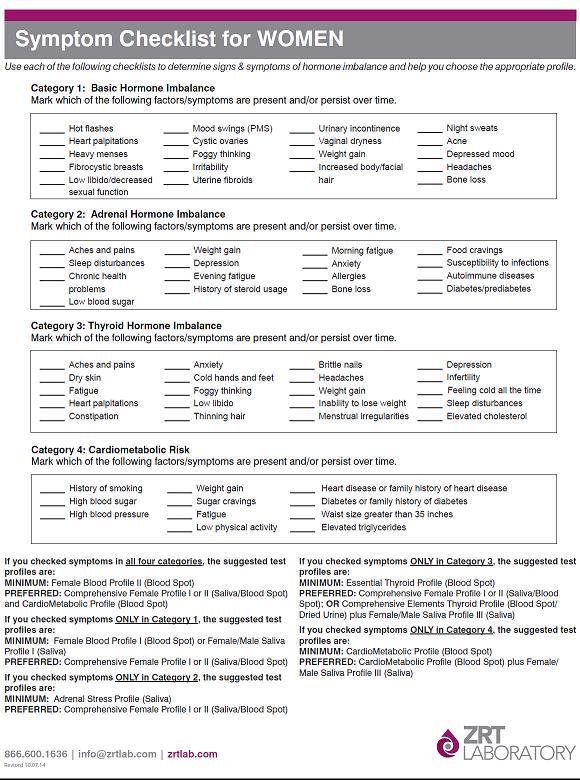
Bioidentical Hormone Replacement Therapy is it right for YOU?
Bioidentical hormone formulations in measured doses (i.e., tailored to individual patients) may be obtained from a compounding pharmacy with a physician's prescription after careful testing. Bioidentical estrogen therapy has been utilized extensively in Europe and Japan for several years (Kano 2002).
Estriol. Estriol (E3) has shown beneficial effects in women at risk for cardiovascular disease.
Japanese scientists found that a group of menopausal women treated with E3 for 12 months had a significant decrease in both systolic and diastolic blood pressure (Takahashi 2000). Another placebo-controlled study demonstrated that E3 replacement for 30 weeks improved flow-mediated dilation (a measure of arterial relaxation) (Hayashi 2000). E3 accomplishes these effects by strongly activating nitric oxide signaling systems and stabilizing atherosclerotic plaques (Kano 2002).
E3 may further reduce cardiovascular risk through its beneficial effects on lipid profiles. One Japanese study found that E3 prevented a postmenopausal rise in total cholesterol while not inducing elevated triglyceride levels, a side effect frequently seen after treatment with conventional estrogen therapy (Itoi 2000). E3, in combination with a statin drug, can reduce carotid artery intima-media thickness (a measure of atherosclerosis) in postmenopausal women with elevated blood lipids (Yamanaka 2005).
E3 also increases bone mineral density, a vital parameter in post-menopausal women at risk for osteoporosis. In one study, women treated with E3 exhibited an increase in bone mineral density and improved climacteric (i.e., menopausal) symptoms with no increased risk of endometrial hyperplasia (Minaguchi 1996). In a second study, researchers treated postmenopausal and elderly women with either a combination of E3 and 1,000 mg/day of calcium lactate or 1,000 mg/day of calcium lactate alone. Bone mineral density significantly increased in women receiving E3 versus a decrease in those not receiving E3 (Nishibe 1996). In a summary statement, the researchers wrote, “the acceleration of bone turnover usually observed after menopause was prevented by treatment with E3 [estriol]” (Nozaki 1996).
E3 also supports sexual and urinary health. For example, one study showed that E3-treated women reported a 68% reduction in symptoms of incontinence compared to 16% in the placebo group (Dessole 2004). Women with recurrent urinary tract infections experienced a 91% reduction in infections following treatment with an intravaginal estriol cream compared to the placebo group (Raz 1993). Another study demonstrated that locally administered E3 therapy significantly increased the number of blood vessels surrounding the urethra, thereby improving its ability to maintain urine in the bladder until the desire to void the bladder is reached (Kobata 2008). The addition of E3 to standard therapy for prevention of urinary tract infections reduced the number of recurrences 11-fold, and the days of antibiotic therapy more than 12-fold in another study (Davidov 2009).
Stress incontinence refers to intermittent loss of urine with pelvic floor stress from laughing, coughing, etc. Pelvic floor muscle exercises are effective in reducing stress incontinence, and studies suggest that E3 adds substantially to the beneficial effect(s) (Ishiko 2001).
E3 can offer relief for women suffering from atrophic vaginitis, the symptoms of which include vaginal dryness, vaginal burning, and painful intercourse. After 4 weeks of treatment with an intravaginal estriol cream, researchers noted that “atrophy of vaginal epithelium and chronic vaginitis stopped or significantly decreased… The subjective complaints relating to the estrogen deficiency (vaginal burning and dryness, itching, dyspareunia [painful sex] and urinary dysfunctions) ceased. Side-effects and complications during the treatment were not found” (Koloszar 1995). More objective improvements to vaginal dryness and acidity have been demonstrated in recent studies (Chollet 2009).
Topical estriol creams applied to the face and neck can reduce many symptoms of aging skin (e.g., dryness and wrinkling). Animal studies demonstrate that estriol cream promotes collagen production and enhances skin's elasticity (Ozyazgan 2005).
Studies have also shown E3 to be effective in the treatment of menopausal symptoms. In one study, women being treated with varying doses of E3 for six months had decreased vasomotor symptoms of menopause (e.g., hot flashes). The improvements were found to be dose-dependent. There were no detrimental effects on uterine or breast tissue (Tzingounis 1978). Other studies have shown similar results with up to 71% of patients reporting elimination of hot flashes and sweating and 21% reporting a substantial reduction (Lauritzen 1987).
Progesterone. Progesterone complements and balances the impact of estrogen in aging women. Combined with estrogen, progesterone substantially improved the amount of time women with a history of heart attack or coronary artery disease could work out on a treadmill before reducing blood flow to the heart. Use of non-bioidentical progesterone produced no effect (Rosano 2000). Another mechanism by which progesterone enhances cardiovascular health is its ability to maintain or even increase HDL levels in women receiving estrogen replacement therapy (Bernstein 2010; Ottosson 1985; Jensen 1987).
Progesterone has a major role in relieving menopausal symptoms as well. Four head-to-head studies comparing progesterone to non-bioidentical synthetic progestogen (progestin) reported that women experienced greater satisfaction, improved quality of life, and fewer side effects when switched from progestin to progesterone (Hargrove 1989; Montplaisir 2001; Ryan 2001; Lindenfeld 2002). The beneficial effects of progesterone compared to non-bioidentical progestin included a 30% reduction in sleep problems, 50% reduction in anxiety, 60% reduction in depression, 25% reduction in menstrual bleeding, 40% reduction in cognitive difficulties, and 30% improvement in sexual function. Eighty percent of women in the study reported overall satisfaction with the bioidentical progesterone formulation (Fitzpatrick 2000).
What You Need to Know: Bioidentical Hormones
- Non-bioidentical hormones are chemically different than natural hormones produced within the body. The use of non-bioidentical estrogen and synthetic progestin in the WHI trial was associated with an increased risk of breast cancer, heart attack, venous blood clot and stroke.
- Non-bioidentical, oral conventional hormone replacement therapy is associated with an increased risk of uterine cancer.
- Bioidentical hormones have the same molecular structure as the hormones produced naturally within the body. The body does not distinguish between supplemental bioidentical hormones and the hormones produced within the body. As a result, bioidentical hormones are properly utilized, and are able to be naturally metabolized and excreted from the body.
- Current literature suggests that bioidentical progesterone is associated with a decreased risk of breast cancer.
- A scientific literature review suggests that bioidentical progesterone may be superior to progestins in treating menopausal symptoms. Estriol (see below) is also highly effective in the treatment of menopausal symptoms.
- Research on bioidentical progesterone has shown beneficial effects (e.g., decreasing the risk of blood clots, protecting against atherosclerosis, and maintaining healthy HDL levels) on cardiovascular health.
- Three major types of estrogen are produced naturally in a woman's body: estrone (E1), estradiol (E2), and estriol (E3).
- Estriol has been shown to improve bone density, promote youthful skin, enhance urinary health, and improve sexual function.
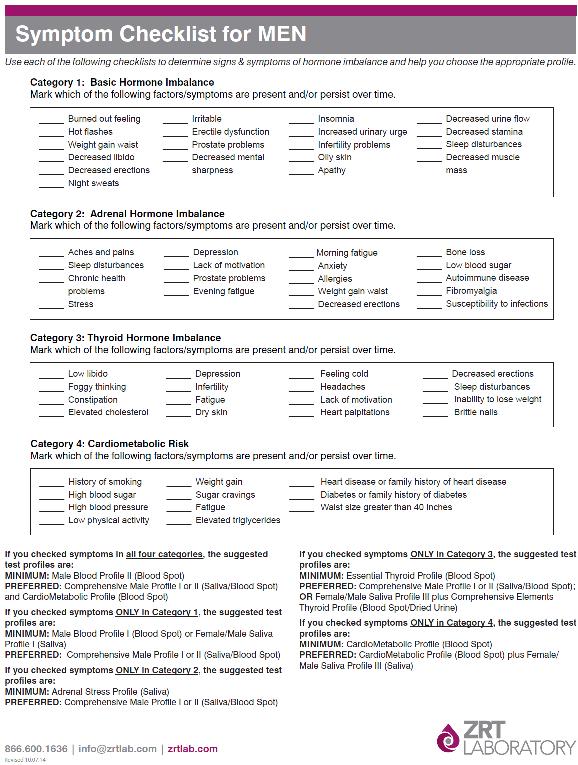
Testosterone replacement therapy can help older men deficient in the hormone reduce their risks of heart disease, diabetes, and death, according to new research presented this week at ENDO 08, the annual meeting of The Endocrine Society.
''The goal of testosterone treatment is to keep the levels within normal range," says Farid Saad, director of scientific affairs for Bayer Schering Pharma in Berlin. Saad presented two of the studies at the meeting, held in San Francisco. Bayer Schering Pharma makes several testosterone products.
Low levels of testosterone are common with age, Saad says, occurring in about 18% of 70-year-olds. Low levels of testosterone, he says, are associated with the metabolic syndrome -- a cluster of risk factors such as abnormal cholesterol and high blood pressure that boost risk of heart disease, stroke, and type 2 diabetes as well as other risks to health.
In the studies, Saad and his colleagues found that testosterone replacement therapy reduced the metabolic syndrome risk factors and did so in a similar way in all the age ranges studied.
Testosterone Replacement Therapy and Heart Disease Risks
In the first study, Saad's team looked at 95 men, aged 34 to 69, with low levels of testosterone.
All had metabolic syndrome. Those who have this diagnosis must have three of five risk factors: increased waist circumference, low "good" cholesterol or HDL, high triglycerides, elevated blood pressure, and elevated blood sugar.
"We treated them for at least a year," he tells WebMD. Every three months, they measured cholesterol, waist circumference, and other parameters.
Testosterone replacement was given as a long-acting injection, every three months. The same product is not yet available in the U.S., Saad says, although other types are.
Testosterone Replacement Therapy: Test Results
"We saw a consistent improvement of the parameters of metabolic syndrome," Saad says. The men were not given a special diet or exercise program.
The supplemental testosterone reduced total cholesterol, "bad" LDL cholesterol, triglycerides, and body mass index while improving "good"HDL cholesterol. The men lost their pot bellies, Saad says. "What we see after 12 months is a reduction in two or three trouser sizes, three or four inches off the waist. We see a reduction by one-fourth to one-third of their total cholesterol."
No adverse effects were reported, he says.
While hormone replacement therapy for women has been found to be associated with increased risks of heart disease and other problems, Saad doesn't foresee that will be the case with testosterone replacement. "There are fundamental differences between hormone replacement in women and testosterone treatment in men," he tells WebMD.
Testosterone Replacement Therapy: No Age Effects?
In a second study, Saad divided the same 95 men into three groups, based on age: less than 57, 57 to 63, and older than 63.
They found the older men and the younger men had similar improvement in their risk factors.
Follow-up
"There are some precautions with testosterone supplementation," Saad tells WebMD. "We need to monitor the prostate."
"It is well known that with prostate cancer, the cancer is usually dependent on testosterone. Prostate cancer is a slow-growing tumor." Cancerof the gland must be ruled out before starting supplements, he says. He also advises routine prostate checkups while on treatment.
A test to monitor red blood cell formation, called a hematocrit, is needed, too. "Testosterone increases red blood cells," he says. In excess, it can theoretically boost heart attack or stroke risk.
SOURCES for this article include: World Health News, Life Extension.com, WebMD, and WikiPedia.
If you prefer not to be tested, we do have natural bio identical hormone products available for men and women in our Natural Pharmacy. Please feel free to schedule an appointment for assessment and testing as well.
We do have a few $99 slots left for the month of July.
Join our weekly health blog for FREE Natural Health tips!
Interested in saving a TON on awesome, professional products with FREE shipping and Volume discounts??? Then:
Visit our Natural Product Pharmacy for the best prices and FREE SHIPPING on hundreds of natural products from professional brands like: Metagenics, Douglas Laboratories, Pure Encapsulations, Integrative Therapeutics, Thorne Research, and Carlson Labs!
Taryn DeCicco, ND, LAc, LDN
Naturopath
Acupuncturist
Clinical Nutritionist
Professional Vitamins and Supplements
Chinese Herbs
Natural Skin Products
Arlington Heights, IL
www.apple-a-day-clinic.com
We specialize in Acne, Skin, and Digestive disorders! Please contact us for a free consultation! I do work long distance. Thank you from the bottom of our cart! We truly appreciate your product purchases, visits, and referrals! They enable us to give people the help they need and continue our valuable work.
Share the HEALTH!
|

FREE Shipping and
Save 10-20%
on over 500 TOP
Professional Products
|

Like US?
Join us on FB!
|

We LOVE to Tweet!
Join us on Twitter!
|

Visit our Natural Health Library for many GREAT Articles!
|

Don't Miss a thing! Subscribe now to get our new articles via email.
|

Send this article to a friend!
|
|
|
|
|
|
|
|
|
|
|
|
|
|
|
|
|
|
|
|
|
|
|
|
|
|


